
A
WORD FROM RBO's EDITOR:
We are pleased to have
many visitors from around
the world on this page.
Please, feel free to
download the audio-file
and to use it cost-free.
However, this will be
under the condition that
you inform RBO about
intended use by sending a
mail to: radiobridge@aol.com
Any other feedback would
also be appreciated.
The copyright remains
with RBO. |
"MAKING
IT WORK"
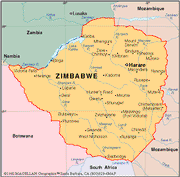
IN ZIMBABWE - EPISODE B
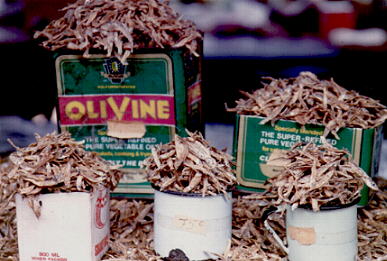
Poor nutrition in
sub-Saharan Africa is
often linked to a lack of
fat in people's diets.
Fat is required
to help absorb vitamins,
proteins, and other
nutrients. Ten of the 20
countries with the lowest
per capita visible oil or
fat intake in the world
are in eastern and
southern Africa. Rural
people, especially
children and nursing
mothers, are the most
likely to suffer from
poor nutrition.
As recently
as 1987, 80% of the
vegetable oils and fats
consumed by the
population in Kenya were
imported. The intake of
edible oils remains low,
affecting people's
nutrition and health.
Production of oilseeds,
such as sunflower and
sesame, has traditionally
been minimal, and rural
oil processing has been
virtually nonexistent.
The rural population's
need for oil and animal
feed have been met by
urban processors at high
cost. Structural
adjustment programs in
many African countries
have exacerbated the
situation, creating an
even greater need for
enhanced food security,
as well as enterprise and
employment opportunities.
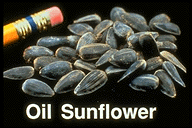
Sunflower is used
primarily for the
production of vegetable
oil, preference being
given to those hybrids
with a high oil content.
Sunflower is a crop with
some resistance to
drought and can grow well
in marginal rainfall
areas. The crop is also
relatively quick maturing
and can give good yields
when planted later than
most crops. |